Top Benefits of Secure Data Mining Systems
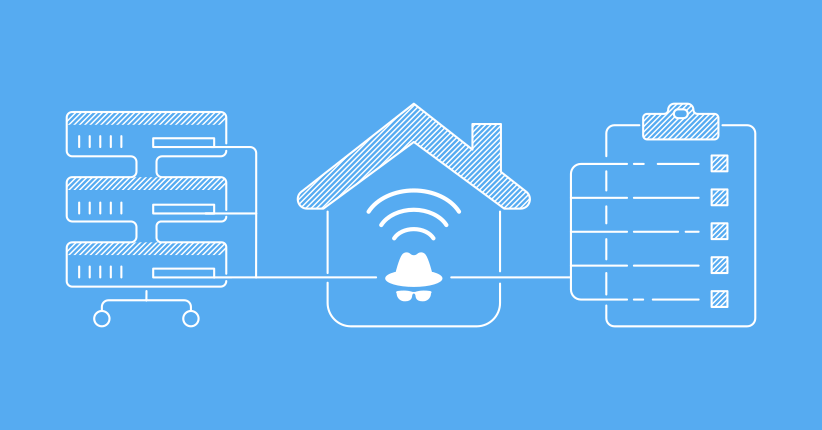
Although a myriad of data anonymization tools exist, we can distinguish in between 2 groups of information anonymization tools based on how they approach privacy in concept. Legacy data anonymization tools work by getting rid of or camouflaging personally recognizable info, or so-called PII. Traditionally, this suggests unique identifiers, such as social security numbers, credit card numbers, and other sort of ID numbers.
With the advances of AI-based reidentification attacks, it's getting increasingly easier to discover this 1:1 relationship, even in the lack of apparent PII guidelines. Our behavioressentially a series of eventsis nearly like a finger print. An enemy doesn't need to know my name or social security number if there are other behavior-based identifiers that are unique to me, such as my purchase history or place history.
Legacy data anonymization tools are typically related to manual labor, whereas contemporary information personal privacy services integrate artificial intelligence and AI to attain more vibrant and reliable outcomes. However let's have a look at the most common types of traditional anonymization initially. Information masking is among the most frequently used data anonymization approaches across markets.
Is Your Web Scraping Infrastructure Ready for 2026?
Data masking can lower the worth or utility of the information, especially if it's too aggressive. The information may not retain the very same circulation or qualities as the original, making it less helpful for analysis. The process of data masking can be complicated, particularly in environments with big and varied datasets.
The masked information ought to abide by the exact same recognition guidelines, constraints, and formats as the original dataset. In time, as systems develop and new information is added or structures change, guaranteeing constant and precise information masking can end up being difficult. The biggest challenge with data masking: to choose what to really mask.
stay anonymous onlineThe problem are quasi identifiers (= the combination of characteristics of information) that if left unprocessed still allow re-identification in a masked dataset rather easily. Pseudonymization is strictly speaking not an anonymization method as pseudomized data is not anonymous data. It's extremely common and so we will describe it here.
While the information can still be matched with its source when one has the best secret, it can't be matched without it. The 1:1 relationship stays and can be recuperated not just by accessing the key however likewise by linking different datasets. The danger of reversibility is constantly high, and as a result, pseudonymization should only be utilized when it's definitely essential to reidentify information subjects at a particular point in time.
Top Advantages of Secure Data Mining Systems
Handling, keeping, and protecting this key is important. If it's compromised, the pseudonymization can be reversed. What's more, under GDPR, pseudonymized information is still considered individual data, indicating that information defense commitments continue to use. In general, while pseudonymization might be a common practice today, it needs to only be utilized as a stand-alone tool when definitely needed.
This technique lowers the granularity of the information. For instance, rather of displaying a precise age of 27, the data might be generalized to an age range, like 20-30. Generalization causes a substantial loss of information utility by decreasing information granularity. Over-generalizing can render information nearly useless, while under-generalizing might not offer enough personal privacy.
Generalized information sets may contain sufficient information to infer about people, specifically when integrated with other information sources. Data swapping or perturbation describes the technique of replacing original data values with worths from other records. The privacy-utility compromise strikes once again: perturbing data results in a loss of information, which can impact the precision and dependability of analyses carried out on the worried data.
How to Configure Private Proxy Infrastructure in 2026
Safeguarding against re-identification while preserving information utility is challenging. Randomization is a tradition data anonymization approach that changes the data to make it less connected to an individual.
Maintaining spatial or temporal relationships in the information can be complicated. Selecting the best technique (i.e. what variables to add sound to and just how much) to do the job is likewise difficult since each data type and utilize case might call for a various method. Picking the wrong technique can have major consequences downstream, leading to inadequate privacy defense or extreme information distortion.
On the intense side, randomization strategies are fairly uncomplicated to execute, making them accessible to a vast array of companies and information specialists. Data redaction is comparable to information masking, but when it comes to this data anonymization technique, entire information worths or areas are eliminated or obscured. Erasing PII is simple to do.












