Increasing Bot Rates With Rotating Proxies
Real-time pipelines perform: Field mapping and worth normalization Schema enforcement based on use-case design templates Error detection and correction before storage Every record gets in the system tidy, validated, and ready for downstream intake. Without metadata tracking, it's impossible to show where data came from or how it was processed.
proxy server
These governance requirements are significantly intricate, which is why integrating enterprise information integration options is vital for end-to-end traceability. Governance is constructed into every layer: Family tree tracking ties raw inputs to output endpoints Embedded legal descriptors define source, license, and allowable usage Traceable access rules are scoped by user role and jurisdiction Teams can validate compliance, trace mistakes, and implement gain access to policies without retroactive fixes or manual cleanup.
Speed, reliability, and gain access to control are lost. Expose information by means of handled APIs: RESTful endpoints with token authentication Rate limiting and usage logging per consumer Payload personalization for batch or stream gain access to Systems can incorporate scraping outputs directly into analytics, CRM, or LLM pipelineswithout waiting for manual syncs. Set up + disperse crawl tasks Dispersed queues, task prioritization Conserve tidy, query-ready information S3, Parquet, Delta Lake, HDFS, versioning Normalize, verify, and implement Real-time mappers, schema design templates Tag, track, and protected information Family tree metadata, use rights, gain access to logs Serve to systems and apps APIs, rate limiting, batch/stream shipment When we craft web scraping architectures, we develop them exactly like thislayer by layer, with clear duties, built-in governance, and scale-ready defaults.
It's about providing structured, usable information that can survive change, audits, and scale. The development of scraping architecture is not practically volumeit's about productization. When web data is treated as a one-time extract, the result is rework, fragmentation, and compliance blind spots. However when crafted as a data item, scraped details becomes a reusable, governed property that supports numerous business applications without duplication or decay.
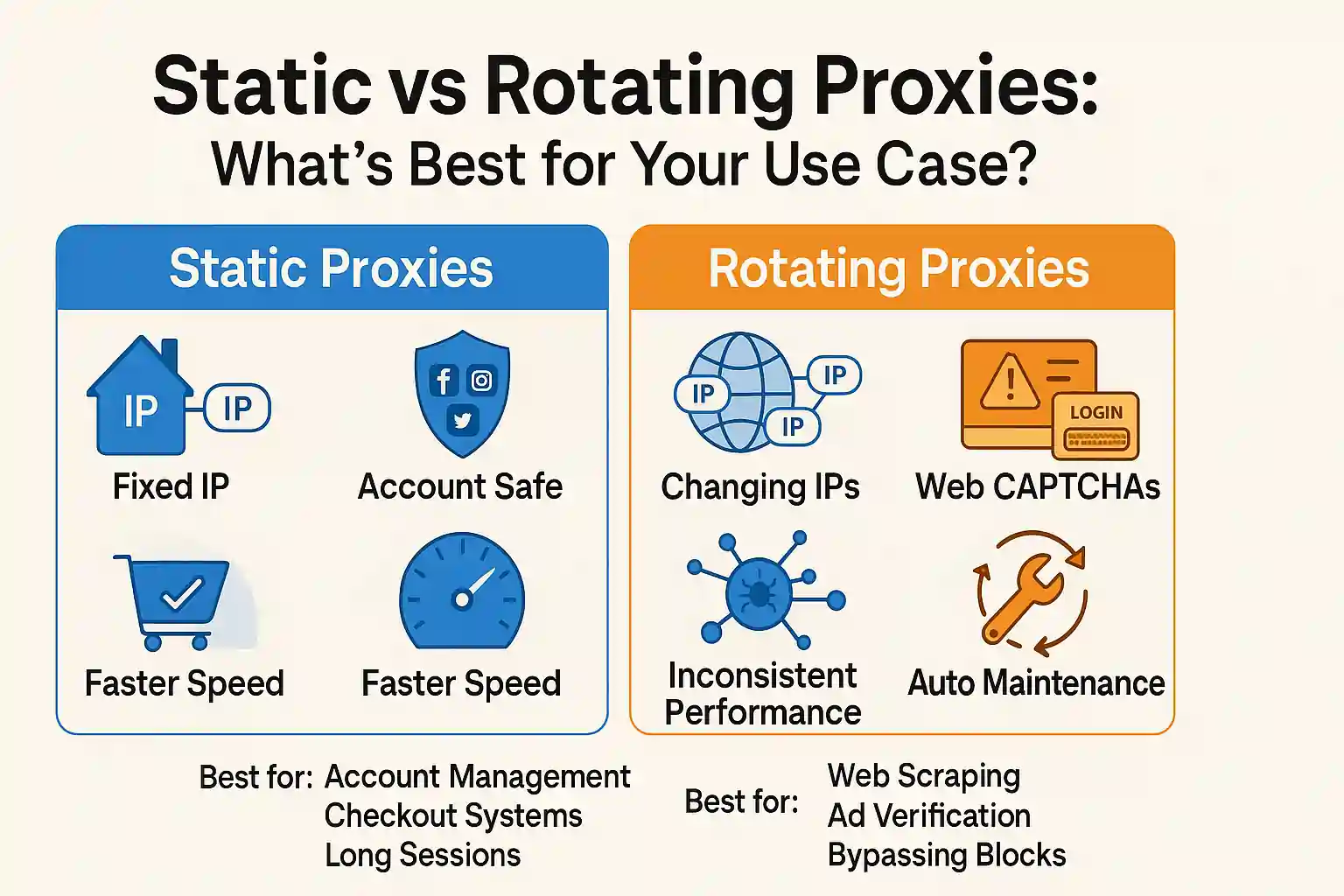
Evaluating Dedicated and Rotating Proxy Solutions
These can serve analytics, AI models, dashboards, or external sharing, without re-engineering the pipeline whenever. The ramifications for web scraping systems are clear: Scraping modules map directly to systems of record (product listings, pricing pages, etc) Transformation logic lines up with operational metadata, schema enforcement, and legal tagging Recyclable information productssuch as normalized ASIN versions, seller-level rates, or ZIP-segmented inventoryserve as the building blocks of scalable usage Consumption archetypes define how scraped data flows into LLMs, control panels, CRM triggers, or compliance reporting To ground this concept, take a look at the visual listed below: Treating scraped data as a one-time extract results in squander, duplication, and compliance threats.
Each reconstruct includes cost and increases the opportunity of disparity. A data product method standardizes scraping outputs throughout usage cases. Rather of duplicating extraction, businesses can reuse structured datasets across systems. A governed scraping item includes: Ingestion flows that tag metadata and legal qualities Schema-enforced outputs lined up to real business logic Prebuilt items: stabilized ASIN listings, ZIP-coded inventory, variant-level rates Scraping infrastructure ends up being multiple-use.
It mirrors how GroupBWT develops closed-loop systems for customers. Every improvement is governed. Every shipment endpoint is mapped to real use: LLM consumption, control panel feeds, CRM syncs, or compliance reports.
Deploying Cheap Backconnect Nodes for 2026
Below are anonymized examples of business systems engineered by GroupBWT under NDA. They are active systemslive, governed, and created to run at scale under legal, functional, and facilities restrictions.
Manual checks and brittle scripts triggered everyday blind areas and pricing hold-ups. We provided a web scraping infrastructure that: Tracked layout modifications using dynamic selector logic Lined up product variants with parent SKUs Tagged delivery regions and shipping tiers at the SKU level This supported stock monitoring at 98%+ accuracy and decreased catalog update latency from 9 hours to thirty minutes across 3.2 M items.
A monetary services client required to aggregate disclosures and regulatory filings from over 100 regional and global watchdog websites. Existing supplier APIs were delayed or insufficient. Our team released a facilities of data scraping that: Collected structured and semi-structured documents in real time Utilized template-based parsing to stabilize filings Tagged each record for jurisdiction, issuer, and update frequency As an outcome, latency to schedule dropped from 72 hours to under 1 hour.