Architecting Future-Proof Private Proxy Clusters
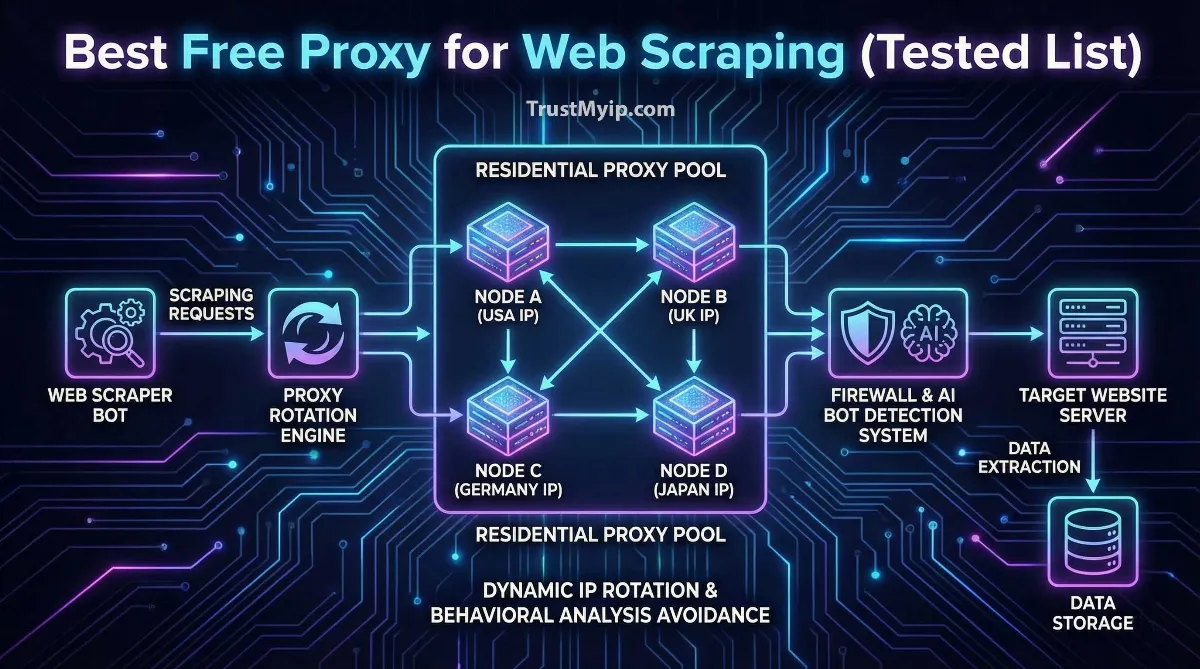
A logistics tech firm required to collect route rates and service times from 50+ freight platforms in near real time. The tradition system could not handle schedule shifts or vibrant ZIP-based quotes.
A property financial investment platform needed zoning approvals, allows, and live listings across 300+ city, municipal, and national websites. We deployed a system with: Layered crawlers targeting computer system registry, listings, and zoning departments Field-based mapping for address, system type, and allow stage Information validation against historic maps and tax records Now, acquisition groups get structured updates daily, with listing-to-market lag lowered by 67%.
The system's core abilities, consisting of data validation and structuring, are offered by specialized data engineering services & services that focus on information stability. Each system above was customized utilizing a dispersed web scraping, optimized for the scale, compliance, and lifecycle needs of its market. While their sources and objectives vary, the foundation is the exact same: Clean input.

Configuring Low-Cost Rotating Proxies for 2026
Even the best-designed scraping systems deal with external volatilityanti-bot escalations, structural page shifts, rate limitations, and unpredictable latency throughout regions. The obstacle isn't simply collecting information.
In business implementations, 3 patterns appear usually: Page structures shift daily, especially on vibrant retail, reservation, and financing platforms. Static XPaths or CSS selectors end up being invalid calmly. Without vibrant queuing, retry storms overload systems. Rather of a stylish recovery, pipelines crash under repeated failure. What's legal to extract in one area may be restricted in another.
To counter this, the infrastructure of data scraping should evolve beyond scripts and ad-hoc retries. We craft scraping systems to perform under production-grade restrictions: Job circulations are decoupled and priority-driven, enabling quick rerouting under load.
Deploying Affordable Backconnect Gateways for 2026
This stops unintentional overreach. Systems are observable. We do not wait for alertswe display signals like drop rate, proxy churn, and line lag in real time. This web scraping infrastructure doesn't just fix what's brokenit prevents quiet decay. When a scraper fails, the system knows, recovers, and keeps logs for audit.
When gain access to is denied, proxy routing adjusts without flooding the target. When systems are constructed from the ground upingestion to governance, durability to reusethey do not break under load. They evolve with change, survive audits, and provide structured data where it matters. This is why contemporary data groups no longer purchase scrapersthey build facilities.
Most break under pressurescripts stall, proxies fail, selectors wander, and compliance breaks quietly. To avoid this, groups require more than tools. They need the ideal facilities of web scrapingbuilt for control, not simply code execution. Tooling provides you access. Facilities provides you ownership. The infrastructure of scraping systems specifies whether your information pipelines endure legal modification, traffic surges, and design shifts.
Secret characteristics of a durable setup:: dispersed queues, retry reasoning, and fault isolation: every record has source, version, and jurisdiction metadata: structure isn't patchedit's enforced at the point of capture: design versions activate parser switches, not outages Without a governed, production-grade infrastructure of data scraping, costs increase undetectably: Information gets re-cleaned in downstream systems Experts question precision Legal teams scramble throughout audits You don't need more toolsyou require an integrated facilities of web scraping that supports scale, jurisdiction logic, and long-term reuse.
Not fast fixes, however systems that last. Advanced parsing jobs can even be sped up by using innovative language models, as checked out in web scraping with ChatGPT workflows for information processing. Reserve a 30-minute assessment with GroupBWT to map your existing scraping stack, find weak links, and see what infrastructure-first delivery looks like.
How Anonymized Tools Boost Data Mining
Rather of depending on one maker or one script, tasks are managed by coordinated nodes across locations, enhancing fault tolerance and speed. This setup prevents system-wide failure when a single task breaks or when content changes mid-scrape. It's the only method that ensures continuous, real-time information circulation at business scalewithout day-to-day maintenance or manual healing.

For any business tracking costs, stock, listings, or news throughout markets, it's the only way to remain accurate and ahead in real time. Rather than breaking, a resistant infrastructure of web scraping spots design shifts and reroutes to backup parsers instantly. It flags disparities and generates brand-new guidelines without stopping the pipeline.
The outcome: undisturbed information circulation. Structured scraping systems provide tidy, identified, and certified data tagged by item, region, and usage rights.
Building an effective and scalable web scraping infrastructure requires an advanced system and meticulous preparation. Initially, you require to get a group of skilled developers, then you require to set up the infrastructure. Lastly, you need an extensive round of testing before you are excellent to begin data extraction. One of the most hard parts remains the scraping facilities.
proxy service tutorialsToday we will be talking about some crucial elements of a robust and well-planned web scraping infrastructure. When scraping sites, specifically in bulk, you require some sort of automated scripts (usually called spiders) that require to be established. These spiders ought to have the ability to produce several threads and act independently so that they can crawl multiple websites at a time.
Scalable Crawling Strategies for Massive Web Tasks
Say you wish to crawl data from an e-commerce site called Now let's say Zuba has multiple subcategories such as books, clothes, watches, and mobile phones. So once you reach the root site, (which can be ), you would like to create 4 different spiders (one for web pages starting with, one for those beginning with and so on).
They might increase more in case there are subcategories under each classification. These spiders can crawl information separately and in case among them crashes due to an uncaught exception, you can resume it individually without interrupting all the other ones. The creation of spiders would also assist you to crawl information at fixed time periods so that your data is always revitalized.
Web scraping does not suggest "event and dumping" of information. You must have validations and checks in location to ensure that filthy information does not end up in your datasets rendering them useless. In case you are scraping data to fill specific data-points, you need to be having restraints for each data point.
For names, you can inspect if they include one or more words and are separated by areas. In this way, you can ensure that unclean or corrupt information do not creep into your data-columns. Before you set about settling your web scraping framework, you need to put in substantial research to examine which one supplies the optimum information accuracy because that will cause better results and less requirement for manual intervention in the long run.












